 11
11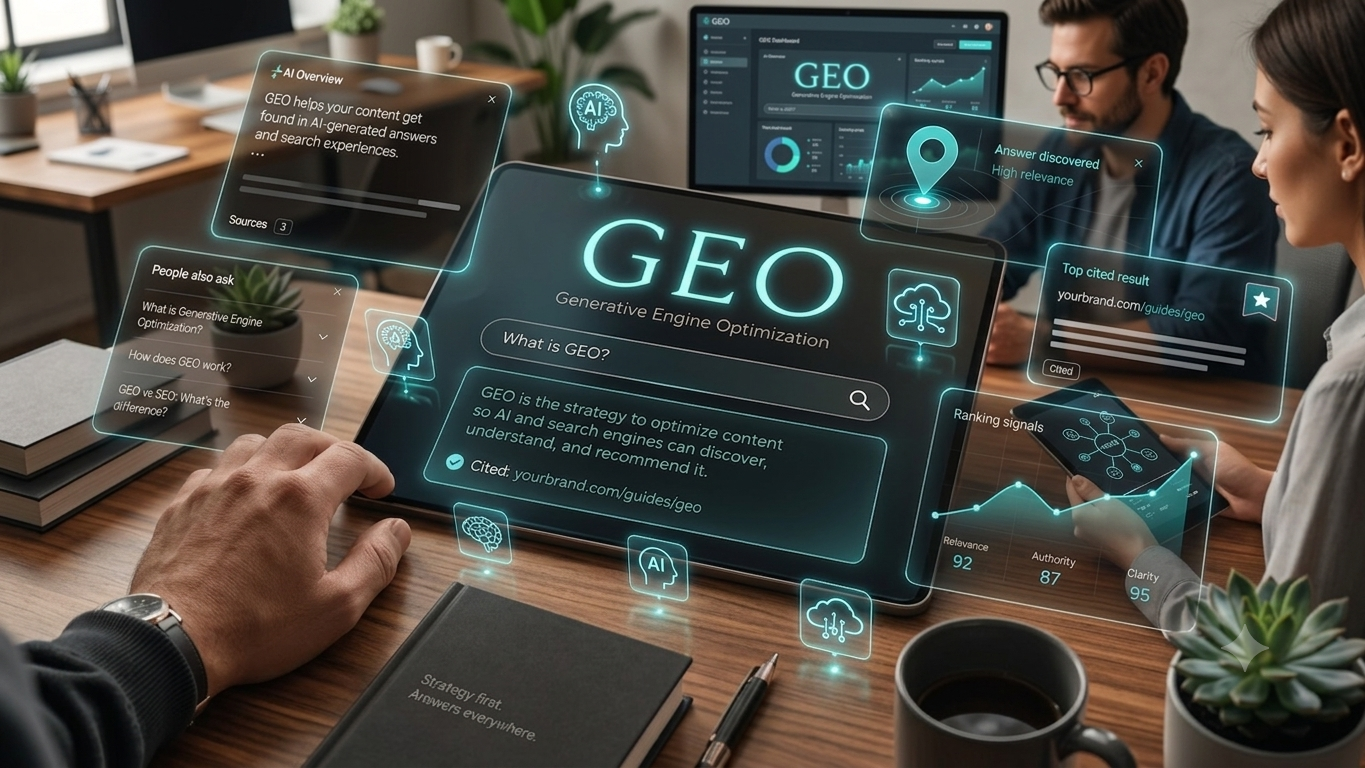
Learn what Generative Engine Optimization (GEO) is, how it works, why it matters, and the best GEO strategies to rank in ChatGPT, Gemini, Perplexity, and AI-powered search engines. Search is changing faster than ever. For years, businesses focused on ranking on Google using traditional Search Engine Optimization (SEO). Today, AI-powered search engines such as ChatGPT, Google Gemini, Perplexity AI, and Microsoft Copilot are transforming how people discover information online.
Instead of showing users a list of blue links, these AI tools generate complete answers by combining information from trusted websites. As a result, website owners must optimize their content differently to increase the chances of being referenced in AI-generated responses.
This new approach is called Generative Engine Optimization (GEO).
In this complete guide, you’ll learn:
By the end of this guide, you’ll know how to create content that performs well in both Google Search and AI-powered search engines.
Generative Engine Optimization (GEO) is the process of creating and optimizing content so that AI-powered search engines can easily understand, trust, and reference it in their generated answers.
Unlike traditional SEO, where the goal is to rank on the first page of Google, GEO focuses on making your content useful enough that AI assistants choose it as a reliable source when answering user questions.
Instead of relying solely on keywords, GEO prioritizes high-quality, context-rich content that answers user questions.
As AI becomes the primary way users search online, GEO is becoming one of the most important digital marketing strategies.
Generative Engine Optimization (GEO) has become one of the most important digital marketing strategies in 2026 because More people are moving beyond traditional search engines and using AI-powered tools to find information. Millions of users now ask AI-powered platforms like ChatGPT, Gemini, Perplexity, and AI search assistants for direct answers instead of clicking through multiple websites. If your content isn’t optimized for these AI systems, you could miss a significant amount of organic traffic.
Millions of users now ask AI assistants questions instead of searching manually.
Examples include:
Instead of visiting multiple websites, users can now get a single AI-generated answer.
If your content is featured as a trusted source in AI-generated responses, you can expect:
This is why GEO is rapidly becoming an essential part of every content strategy.
In 2026, Generative Engine Optimization is no longer optional—it’s becoming an essential part of a successful content strategy. As more users turn to AI assistants for instant answers, businesses and publishers that optimize their content for both search engines and generative AI will have a significant competitive advantage. By creating accurate, well-structured, and genuinely helpful content, you can increase your chances of being recommended by AI platforms while continuing to grow your organic traffic.
As AI-powered search continues to grow in 2026, it’s important to understand the difference between Generative Engine Optimization (GEO) and Traditional Search Engine Optimization (SEO). Although both have the same goal of to increase online visibility, they focus on different search experiences and ranking methods.
Although GEO and SEO share the goal of increasing online visibility, their approaches different.
| Feature | Traditional SEO | Generative Engine Optimization (GEO) |
|---|---|---|
| Primary Goal | Rank higher in search engine results pages (SERPs) | Get cited or referenced in AI-generated answers |
| Target Platforms | Google, Bing, Yahoo | ChatGPT, Gemini, Perplexity, Claude, Copilot, AI Search |
| Content Focus | Keywords, backlinks, and on-page optimization | Comprehensive, conversational, and authoritative content |
| User Intent | Matches keyword-based searches | Answers natural language questions and complex prompts |
| Ranking Method | Search engine algorithms rank web pages | AI models synthesize and reference trusted sources |
| Optimization Strategy | Keyword research, meta tags, technical SEO, link building | Entity optimization, topical authority, structured content, factual accuracy |
| Success Metric | Higher rankings, clicks, and organic traffic | AI citations, brand mentions, visibility in AI responses, and referral traffic |
| Content Style | Optimized around specific keywords | Written to answer complete user questions clearly |
| Importance of E-E-A-T | Important | Critical for AI trust and citations |
| Future Outlook | Still essential | Becoming increasingly important as AI search grows |
The best strategy is not choosing one over the other—it is combining both SEO and GEO.
AI search platforms generally follow a similar process:
Large language models interpret the intent behind a query rather than matching exact keywords.
The AI retrieves information from reliable online sources.
It favors content that is:
The AI creates a natural-language answer based on the most trustworthy information available.
If your content meets these standards, it has a better chance of being included.
Modern AI search systems also evaluate factors such as content quality, topical authority, accuracy, freshness, and reliability before referencing a source. This is why websites that publish well-structured, comprehensive, and reliable content have a better chance of being cited in AI-generated answers. As AI search is changing quickly in 2026, creating content that directly answers user questions with clear formatting and factual information is becoming increasingly important for improving visibility through Generative Engine Optimization (GEO).
Generative Engine Optimization (GEO) offers several advantages for businesses, bloggers, and content creators looking to stay competitive in the AI-driven search landscape. By optimizing content for AI-powered platforms such as ChatGPT, Gemini, Perplexity, and other generative search engines, websites can increase their chances of being cited in AI-generated responses, leading to greater brand visibility and credibility. GEO also helps attract highly targeted traffic because AI users often ask detailed, intent-driven questions and are more likely to engage with content that directly answers their needs. In addition, creating AI-friendly content encourages better organization, improved readability, and stronger topical authority, which can also enhance traditional SEO performance.
AI-generated answers often highlight only a few sources. GEO helps increase the chance that your content will be referenced.
Having AI use your content as a source positions your brand as a trusted expert.
GEO encourages content that answers questions directly and clearly.
As AI search continues to grow, GEO helps your website stay relevant.
Well-structured, informative content keeps readers on your site longer and encourages sharing.
As AI search continues to grow in 2026, businesses that invest in GEO gain a competitive advantage by reaching users across both conventional search engines and AI assistants, building long-term trust, increasing organic traffic, and preparing for the future their digital marketing strategy.
Understand what users genuinely want to know. Create content that fully answers their questions rather than simply targeting keywords.
Example:
Instead of writing “AI Browser,” create comprehensive content like:
AI Browsers Explained: Are They Replacing Chrome in 2026?
Publish multiple in-depth articles around the same subject.
For example, if your niche is AI:
Covering related topics helps build your website as an authority.
Organize your content with descriptive headings.
Example:
This structure makes it easier for both readers and AI systems to understand your content.
Begin with a short answer before expanding on the topic.
Example:
What is GEO?
Generative Engine Optimization is the practice of optimizing content for AI-powered search engines so they can understand and reference it in generated answers.
Use simple, easy-to-understand language.. Write in a way that is accessible to beginners while still providing value to advanced readers.
Examples improve clarity and credibility.
For instance, explain how a travel blog, an e-commerce site, or a software company can apply GEO principles.
AI systems prefer current and relevant information. Review and refresh your articles regularly with new examples, statistics, and trends.
Include author information, Use trusted sources to Support your content with trusted and reliable sources whenever appropriate, and share practical insights based on experience. This helps build trust.
Many websites fail to benefit from Generative Engine Optimization (GEO) because they continue using outdated SEO tactics or overlook the needs of AI-powered search engines. One of the most common mistakes is keyword stuffing, which makes content difficult to read and less useful for both users and AI systems. Another mistake is publishing thin or shallow content that doesn’t fully answer users’ questions. AI search engines prefer comprehensive, well-researched articles that provide clear, accurate, and trustworthy information. Ignoring content structure—such as using vague headings, long blocks of text, or poor formatting—can also make it harder for AI to understand and reference your content.
Many websites struggle with GEO because they:
Avoiding these mistakes can significantly improve your chances of being referenced by AI.
Failing to update outdated information, neglecting E-E-A-T (Experience, Expertise, Authoritativeness, and Trustworthiness) principles, and not supporting claims with reliable sources can reduce your chances of being cited in AI-generated responses. Additionally, many publishers focus only on traditional search rankings and ignore conversational queries, structured data, and topical authority. By avoiding these common mistakes and prioritizing high-quality, user-focused content, you can improve your visibility across both traditional search engines and AI-powered search platforms.
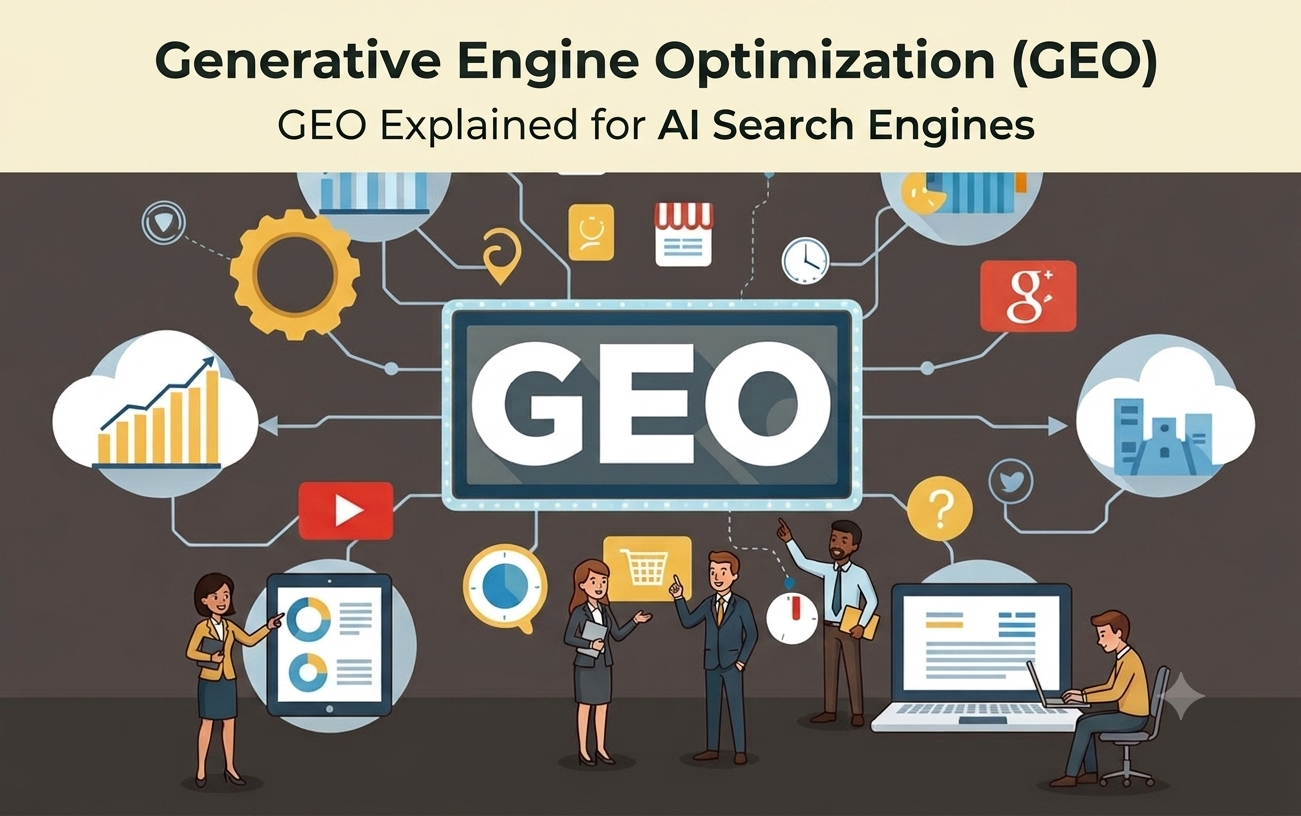
Before publishing your content, use this Generative Engine Optimization (GEO) checklist to ensure it’s optimized for both AI-powered search engines and traditional search results.
Think of GEO as writing for both humans and AI. The best-performing content in 2026 is content that is easy for people to understand, easy for AI to interpret, and valuable enough to be referenced in AI-generated answers. By following this checklist consistently, you’ll improve your chances of earning visibility across AI platforms while strengthening your traditional SEO performance.
If you can answer “yes” to each question, your content is likely in good shape.
To succeed with Generative Engine Optimization (GEO) in 2026, focus on creating content that is valuable for both users and AI-powered search engines. AI platforms are more likely to reference content that is accurate, well-structured, and easy to understand. By following these best practices, you can improve your chances of appearing in AI-generated answers while also strengthening your traditional SEO performance.
Follow these principles consistently:
The most effective GEO strategy is built on helpful, trustworthy, and well-organized content rather than shortcuts or outdated SEO tactics. By answering user questions clearly, demonstrating expertise, maintaining a logical structure, and keeping your content current, you improve your chances of being cited by AI-powered search engines while continuing to perform well in traditional search results. In 2026 and beyond, combining GEO best practices with strong SEO fundamentals will help your website achieve greater visibility, authority, and long-term organic growth.
Generative Engine Optimization (GEO) is still in its early stages, but it is rapidly becoming a core part of digital marketing as AI-powered search continues to evolve. In the coming years, users will increasingly rely on AI assistants such as ChatGPT, Gemini, Perplexity, and other generative search platforms to find information, compare products, and make decisions. Instead of browsing multiple websites, people will expect accurate, personalized, and conversational answers delivered instantly. As a result, businesses and publishers will need to optimize their content not only for traditional search engine rankings but also for AI-generated responses.
The future of GEO will focus less on keyword density and more on content quality, topical authority, factual accuracy, and user intent. AI systems are becoming better at understanding context, evaluating credibility, and identifying trustworthy sources. Websites that consistently publish comprehensive, well-structured, and up-to-date content will have a greater chance of being referenced in AI-generated answers. Factors such as E-E-A-T (Experience, Expertise, Authoritativeness, and Trustworthiness), structured data, clear content organization, and reliable sourcing are expected to play an even bigger role in determining which content AI platforms choose to cite.
AI search will continue to improve, but one thing is clear: content quality will matter more than ever.
Future trends may include:
Websites that focus on providing genuine value will be better positioned to succeed.
The future of search is no longer limited to ranking on a search engine results page—it is about becoming a trusted source that AI systems confidently reference when generating answers. Generative Engine Optimization is shaping the next evolution of content marketing, helping brands reach users wherever they search. By embracing GEO today and focusing on helpful, accurate, and user-centric content, businesses can future-proof their online presence and remain competitive in the rapidly changing AI search ecosystem.
GEO stands for Generative Engine Optimization, the practice of optimizing content for AI-powered search engines and assistants.
No. GEO complements traditional SEO. The strongest strategy combines both approaches.
Content optimized for GEO is more likely to perform well in AI-powered platforms such as ChatGPT, Google Gemini, Microsoft Copilot, and Perplexity AI.
Create high-quality, well-structured, trustworthy, and comprehensive content that answers user questions clearly and demonstrates expertise.
Yes. Bloggers, businesses, publishers, and content creators can all benefit from increased visibility in AI-generated answers.
Generative Engine Optimization (GEO) is transforming the way websites gain visibility in the age of AI-powered search. As platforms like ChatGPT, Gemini, Perplexity, and other AI search engines become increasingly popular, simply ranking on traditional search engines is no longer enough. Businesses, bloggers, and content creators must create high-quality, trustworthy, and well-structured content that AI systems can easily understand, summarize, and reference.
By focusing on user intent, publishing comprehensive content, building topical authority, following E-E-A-T principles, and combining GEO with traditional SEO best practices, you can improve your chances of appearing in both search engine results and AI-generated answers. GEO is not a replacement for SEO—it is the next evolution of search optimization.
As AI continues to reshape how people discover information online, adopting GEO today will help future-proof your website, Build your brand’s authority and achieve long-term organic growth. The websites that prioritize helpful, accurate, and user-focused content will be the ones that succeed in the evolving world of AI search.